Reference
Grader: Sports Card Scanner
Scan, grade, and price your cards instantly.
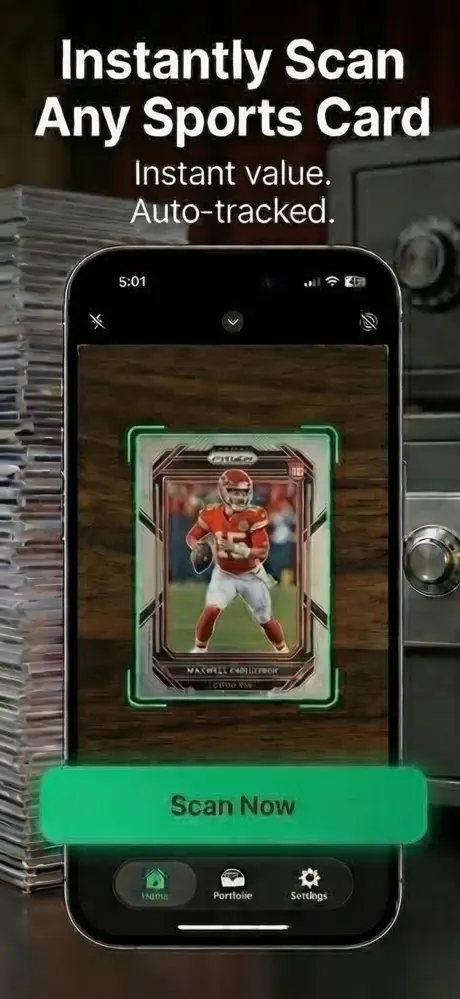
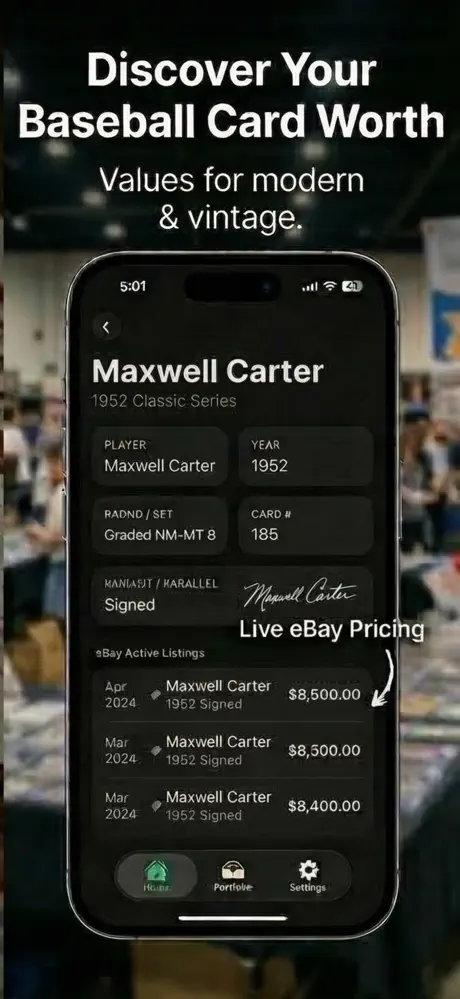
Grader uses AI to instantly scan, grade, and price your sports cards right from your camera. Point, scan, and know your card's value in seconds. Built for collectors, hobbyists, and anyone curious about what their cards are worth.
Download Free on App StorePreview
See it in action.
What it does
Everything you need,
nothing you don't.
AI Card Grading
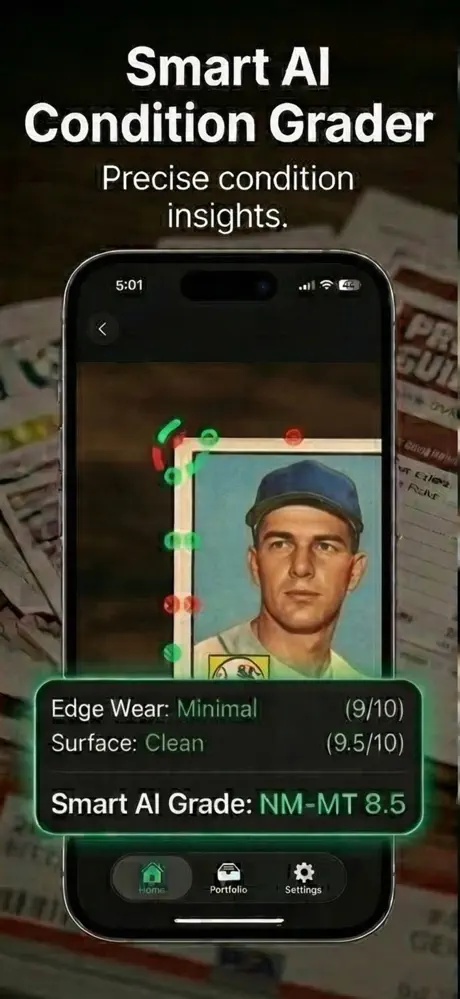
Photograph any sports card and get an instant AI-powered condition grade — centering, corners, edges, and surface.
Price Estimates
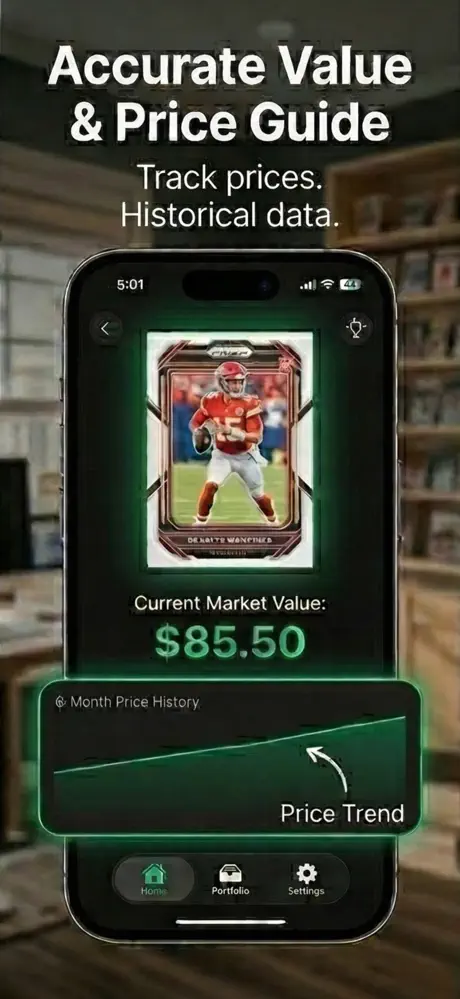
See current market value ranges based on card condition, year, and player.
All Major Sports
Works with baseball, football, basketball, hockey, and soccer cards.
Instant Scan
Point your camera, snap a photo, and get results in seconds. No manual lookup needed.
In depth
Everything about
Grader: Sports Card Scanner.
What Are Football Cards Worth? Values, Prices & Rarity Explained
Football card values depend on a handful of factors that every collector should understand before buying or selling. The player's career significance, the card's condition, its print run, and whether it's a rookie card all drive football card prices up or down dramatically. A common base card of a current starter might sell for under a dollar, while the most valuable football cards — think rare Patrick Mahomes or Tom Brady rookies in gem-mint condition — can fetch six or even seven figures at auction. Scarcity matters more than age: a short-print insert from 2020 can be worth far more than a mass-produced card from 1985. If you're trying to figure out what your football cards are worth, start by identifying the exact year, set, and card number, then check recent sold listings rather than asking prices — what someone actually paid is the only reliable measure of a football card's price value. The most expensive football cards almost always combine a legendary player, a rookie year or key parallel, and a high grade from PSA, BGS, or SGC.
Best Sports Card Scanner & Grading Apps in 2026
A good sports card scanner app can identify a card from a photo in seconds, pulling up the exact set, year, and recent market prices without any manual searching. The best sports card scanner apps in 2026 go further by estimating a card's condition grade before you spend $20–$50 sending it to PSA or BGS, helping you decide which cards are actually worth grading. Grader uses AI trained on professionally graded examples to evaluate centering, corners, edges, and surface quality right from your phone's camera. Whether you're scanning baseball cards from a shoebox in the attic or sorting through a fresh hobby box, a reliable trading card scanner saves hours of manual lookup time. Card grading apps have improved significantly over the past year — the best ones now account for lighting conditions and can distinguish between similar parallels that trip up less sophisticated scanners.
Football Card Price Guides: How to Look Up Any Card's Value
The traditional football card price guide — those thick Beckett books collectors used to carry to card shows — has largely moved online, and that's a good thing for accuracy. Printed football card price books were outdated the moment they hit shelves, but a football card online price guide pulling from live auction data reflects what cards are actually selling for this week. To look up any card's value, you need three pieces of information: the player name, the year, and the specific set or parallel. A football card price finder tool or app can speed this up by scanning the card directly and matching it against a database. One important habit: always filter for completed sales rather than active listings, since asking prices are often wildly inflated. A reliable football card value guide should show you price trends over time, not just a single static number, so you can spot whether a card is rising or cooling off before you make a move.
Classic Football Legends: Jerry Rice, Joe Montana, Warren Moon & Bo Jackson Card Values
Classic football legends from the 1980s and early 1990s still anchor many collections, and their key cards remain actively traded. The Jerry Rice rookie card value — specifically his 1986 Topps #161 — sits comfortably in the $200–$800 range depending on grade, with PSA 10 copies pushing well past $25,000 at auction. A Joe Montana rookie card from the 1981 Topps set commands even higher premiums; his rookie card worth in PSA 9 or 10 condition regularly reaches five figures because it comes from an era when cards were rarely preserved carefully. Warren Moon cards carry a different kind of appeal — his football card value has climbed as collectors and the Hall of Fame have fully recognized his combined CFL and NFL legacy, with his 1985 Topps rookie being the key card to chase. The most valuable Bo Jackson card is typically his 1986 Topps rookie, though his multi-sport status means his baseball rookies from the same era also compete for collector dollars. Condition is everything with vintage cards from this period, since they were printed on thinner stock and often showed centering issues right off the press.
Peyton Manning Card Values: Rookie Cards & Key Years
Peyton Manning remains one of the most collected quarterbacks in the hobby, and his rookie cards from 1998 are the cornerstone of any Manning collection. The Peyton Manning rookie card price varies enormously depending on which product you're looking at — his 1998 Topps base rookie is affordable and easy to find, while his 1998 Playoff Contenders Ticket auto is a legitimate five-figure card in top grade. Beyond rookies, Peyton Manning card values stay strongest for autographed inserts and low-numbered parallels from his prime years with the Colts and his final Super Bowl season with the Broncos. A Peyton Manning football card worth tracking as an investment should ideally be graded, since raw copies carry a significant discount in this part of the market. His retirement hasn't cooled demand the way it does for some players — Manning's cultural visibility through media work and his two Super Bowl rings keep his football card worth stable compared to peers from the same draft class.
Most Valuable Hockey Cards: Top Picks Worth Collecting
Hockey cards don't get the same mainstream attention as football or baseball, but the most valuable hockey cards can rival any sport for price. Wayne Gretzky's 1979 O-Pee-Chee rookie is the undisputed king, with high-grade examples selling for hundreds of thousands of dollars — it's the hockey equivalent of the 1952 Topps Mickey Mantle. Beyond Gretzky, high value hockey cards tend to cluster around generational talents: Bobby Orr's 1966 Topps rookie, Mario Lemieux's 1985 O-Pee-Chee, and more recently, Connor McDavid's Young Guns rookie from 2015-16 Upper Deck. Hockey card value is heavily influenced by condition and the grading population — because hockey cards were produced in smaller quantities than football or baseball, finding gem-mint copies is genuinely difficult for anything pre-2000. The hockey cards worth the most money almost always combine a Hall of Fame player with a recognized rookie card from a flagship set, so collectors looking to enter the market should focus there rather than chasing obscure inserts.
Dan Marino Football Card Values: What They're Worth Today
Dan Marino holds a unique place in football card collecting — he was the face of the hobby throughout the 1980s and early 1990s, and his 1984 Topps rookie card remains one of the most iconic cards in the sport. The Dan Marino card value for that rookie depends heavily on grade: raw copies in decent shape trade for $30–$80, while a PSA 10 has sold for over $100,000 due to the extreme difficulty of finding one with sharp corners and good centering. Beyond the Topps rookie, Dan Marino football card values are strongest for his 1984 Topps USFL card and early insert cards from the mid-1990s when premium products first launched. One factor that keeps the value of Dan Marino football cards steady is his continued cultural relevance and the fact that he held passing records for nearly two decades. If you're trying to determine what a Dan Marino card is worth today, scanning it with a grading app gives you a quick condition estimate before you invest in professional grading — because with Marino, the difference between a PSA 8 and PSA 9 can be thousands of dollars.
Tom Brady Rookie Card Value: Price Trends & What to Expect
Tom Brady's rookie cards from 2000 experienced one of the most dramatic price surges in hobby history, peaking around his final Super Bowl run and retirement announcement. The Tom Brady rookie card value varies wildly across the dozens of products released that year — his 2000 Bowman Chrome rookie is the most widely recognized key card, while his 2000 Playoff Contenders Championship Ticket autograph is the ultimate trophy card, with PSA 10 examples selling for over a million dollars. Since his retirement, Tom Brady rookie card prices have settled from their peaks but remain well above pre-2019 levels, reflecting his status as a consensus top-two quarterback of all time. Market corrections after a player retires are normal and historically temporary for all-time greats — collectors who bought Gretzky or Jordan rookies during similar post-retirement dips were rewarded over the following decade. The key factor to watch is graded population: as more Brady rookies get submitted and graded, the supply of high-grade copies increases, which can put gradual downward pressure on prices for anything below gem-mint condition.
Most Valuable Baseball Cards: Barry Bonds, Sammy Sosa & More
The steroid era remains one of the most complicated chapters in baseball card collecting, but that hasn't stopped certain cards from commanding serious money. The most valuable Barry Bonds card is his 1986 Topps Traded rookie in PSA 10 — it's a notoriously tough grade for that set, and clean copies sell for several thousand dollars despite the controversies around his career. Sammy Sosa cards value has seen a resurgence in recent years as nostalgia for the 1998 home run chase grows and a new generation of collectors discovers his 1990 Leaf rookie, which is his most sought-after card by a wide margin. Beyond these two, the broader landscape of valuable baseball cards still centers on pre-war rarities and key rookies from the 1950s through 1970s — a T206 Honus Wagner or 1952 Topps Mantle will always sit at the top. For modern collectors on a budget, targeting rookie cards of recently inducted Hall of Famers before their induction date is one of the more reliable strategies, since prices typically spike in the weeks surrounding a Cooperstown announcement.
Most Valuable Soccer Cards Worth Collecting
Soccer cards are the fastest-growing segment of the sports card market, driven by the sport's global fanbase and a wave of young talent that has captivated collectors worldwide. The most valuable soccer cards almost all feature generational players — Lionel Messi and Cristiano Ronaldo rookie cards from Panini products like 2004 Mega Cracks and 2002-03 Panini Megafichas lead the market, with top-grade examples reaching six figures. Younger stars like Kylian Mbappé, Jude Bellingham, and Lamine Yamal have created a new tier of high-value modern cards, particularly from Topps Chrome UEFA Champions League sets that appeal to both European and American collectors. One thing that makes soccer cards unique is the sheer number of international products — cards are issued for domestic leagues, Champions League, World Cup, and Euros, so identifying which product holds the true "rookie" designation matters more here than in any other sport. Collectors entering the soccer card market should focus on flagship products from Topps and Panini rather than regional sticker sets, since those are the cards that hold long-term value and trade most actively on the secondary market.
Common questions
Questions answered.
Everything you need to know about Grader: Sports Card Scanner.
Is Grader: Sports Card Scanner free to use?
Grader: Sports Card Scanner is free to download with basic scanning features. Some advanced grading and pricing features may require a subscription or in-app purchase.
Does Grader: Sports Card Scanner work offline?
The app requires an internet connection for AI grading and real-time pricing lookups. You can view previously scanned cards offline, but new scans need connectivity to process.
What iOS version does Grader: Sports Card Scanner require?
Grader: Sports Card Scanner requires iOS 16.0 or later and is compatible with iPhone and iPad. The app takes advantage of newer camera hardware for better scan quality.
How accurate is the AI grading in Grader: Sports Card Scanner?
The AI grading provides a reliable estimate based on visible card condition factors like centering, corners, edges, and surface. It serves as a useful reference point, though professional grading services like PSA or BGS remain the standard for official grades.
Does Grader: Sports Card Scanner store my data or card images?
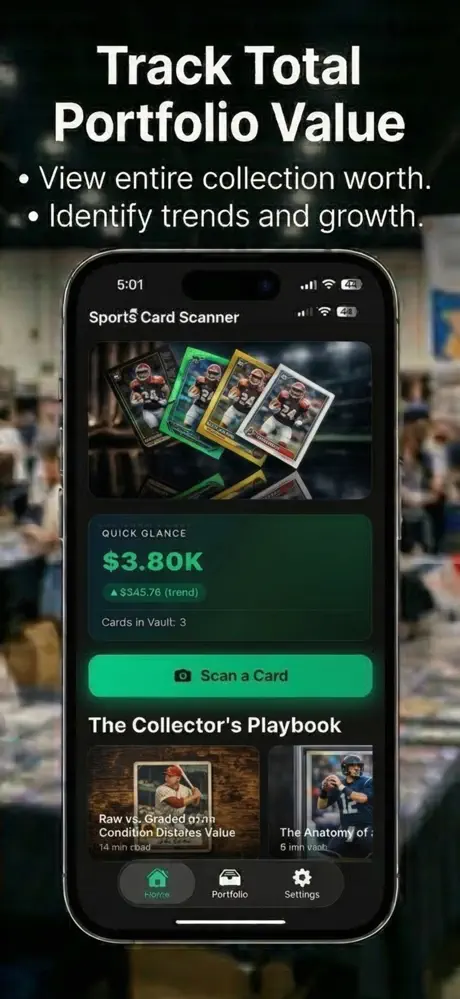
Card images are processed to deliver grading and pricing results. Your collection data is stored locally on your device, and the app does not sell personal information to third parties.
Ready to try Grader: Sports Card Scanner?
Free to download. No subscriptions required.
Download on App Store