Spider Identifier: Pest Scanner icon

Education

Spider Identifier: Pest Scanner

Identify any spider or pest instantly.

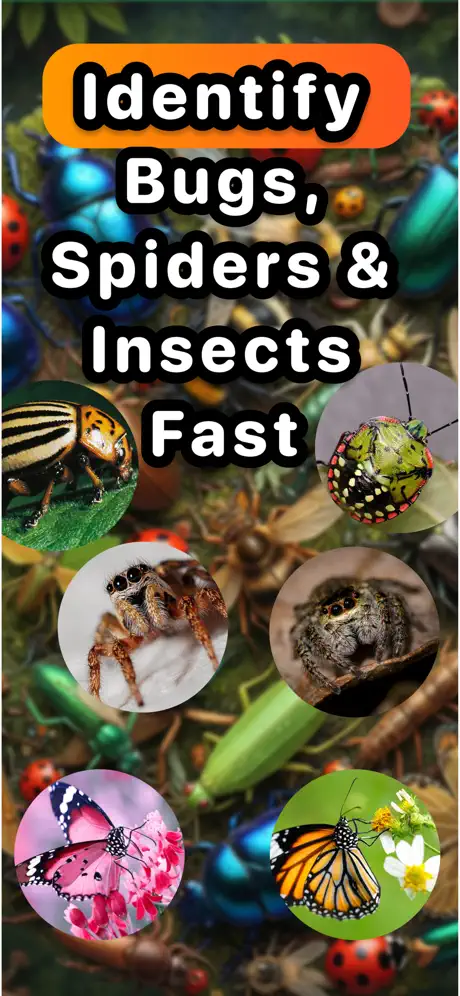
Spider Identifier uses AI to identify spiders, ticks, roaches, and other household pests from a photo. Find out if a spider is dangerous, learn about pest behaviour, and know when to call an exterminator.

iOS Free 5.0 (1)
Download Free on App Store

Preview

See it in action.

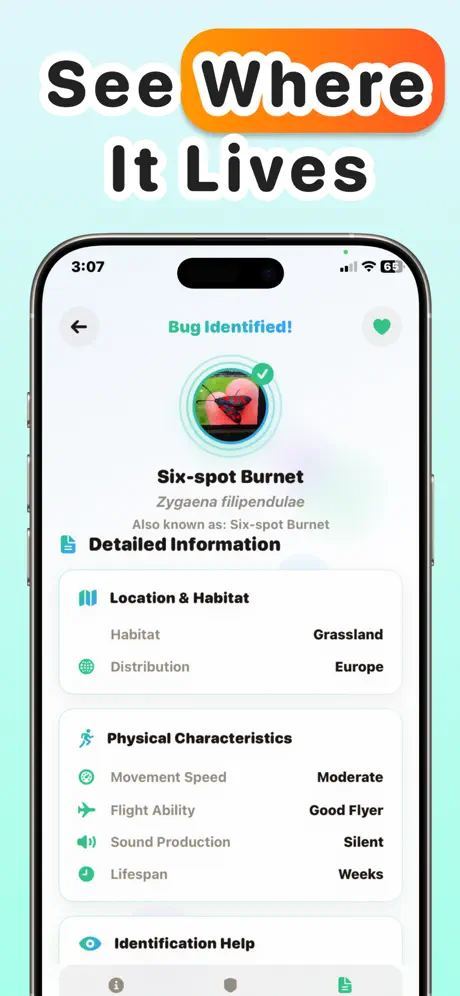
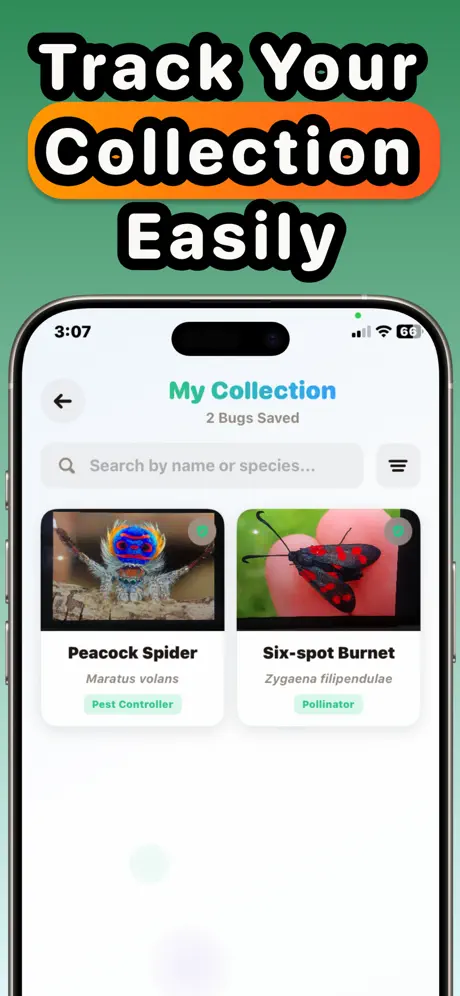
Spider Identifier: Pest Scanner screenshot 1
Spider Identifier: Pest Scanner screenshot 2
Spider Identifier: Pest Scanner screenshot 3
Spider Identifier: Pest Scanner screenshot 4
Spider Identifier: Pest Scanner screenshot 5
Spider Identifier: Pest Scanner screenshot 6
Spider Identifier: Pest Scanner screenshot 7

What it does

Everything you need,
nothing you don't.

01

AI Spider Identification

Photograph any spider and get an instant species identification with AI image recognition.

02

Danger Assessment

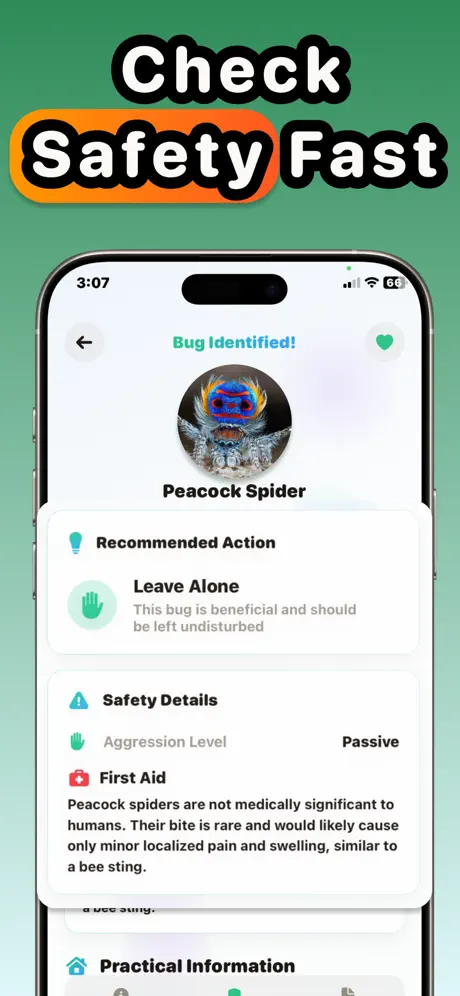
Know immediately if a spider is venomous or medically significant.

03

Pest Scanner

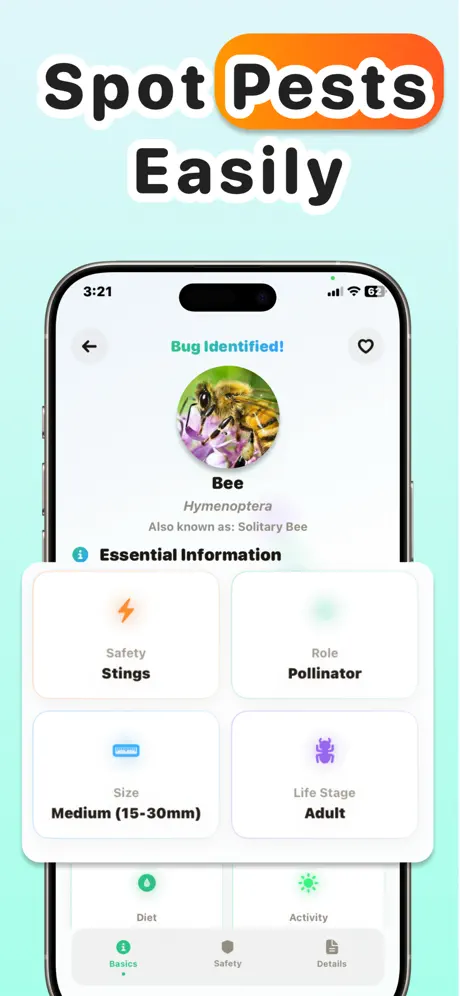
Also identifies ticks, roaches, bed bugs, ants, and other common household pests.

04

Detailed Species Info

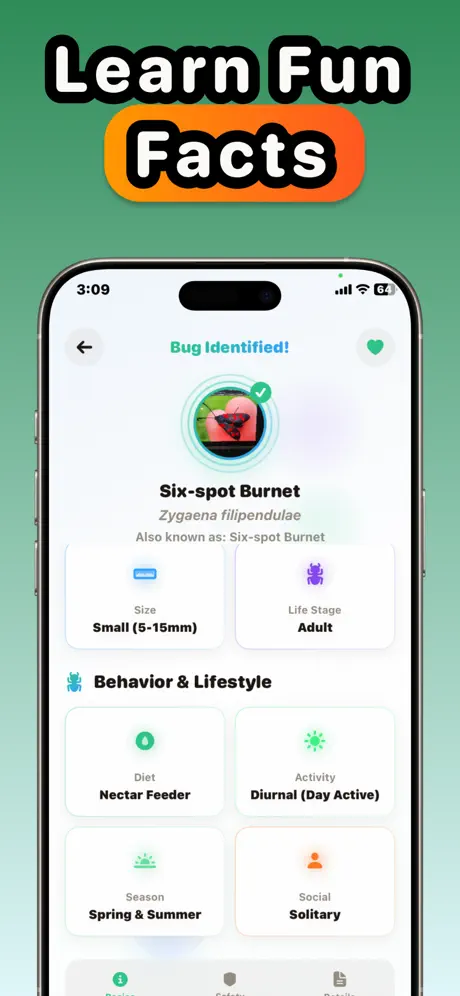
Learn about habitat, behaviour, and whether professional pest control is recommended.

In depth

Everything about
Spider Identifier: Pest Scanner.

Best Insect and Bug Identification Apps

Finding the right insect identification app can save you a lot of guesswork when something crawls across your kitchen floor. The best options use AI-powered image recognition to match your photo against databases of thousands of species, giving you a reliable answer in seconds. A quality insect identifier app should handle more than just common bugs — it needs to recognize regional species, distinguish between similar-looking insects, and flag anything potentially dangerous. When choosing an app to identify bugs, look for one that works offline, since you'll often encounter unknown pests in basements, garages, or campsites without great signal. Spider Identifier doubles as a comprehensive insect id app, covering spiders, ticks, roaches, bed bugs, and other household pests with clear danger warnings when a species poses a real threat.

American, Domestic, and Southern House Spiders

The American house spider is one of the most frequently encountered arachnids in North American homes, typically building messy, tangled webs in corners, window frames, and crawl spaces. These small, brownish spiders with mottled abdomens are completely harmless and actually help control populations of flies, mosquitoes, and other nuisance insects. The domestic house spider — sometimes confused with the American species — tends to be slightly larger with longer legs and builds funnel-shaped webs in dark, undisturbed areas like attics and basements. In the southeastern United States, the southern house spider is especially common, and males are frequently mistaken for brown recluse spiders due to their similar coloring and body shape. Knowing which domestic spider you're actually looking at can prevent unnecessary panic, since all three of these house-dwelling species are harmless to people and pets.

How to Identify Spider Bites

Most suspected spider bites are actually caused by other insects, skin infections, or allergic reactions — doctors misdiagnose them frequently because the symptoms overlap. A genuine spider bite identification starts with context: did you actually see the spider, and were you in a situation where one could have bitten you, like reaching into a dark storage box or putting on shoes left in a garage? A common house spider bite, on the rare occasion it happens, typically looks like a small red bump similar to a mosquito bite and resolves on its own within a few days. What most people search for in a spider bites identification chart are the distinctive signs of medically significant bites — a brown recluse bite may develop a central blister surrounded by a bluish ring, while a black widow bite causes intense muscle cramping rather than a dramatic wound. If you're trying to figure out a household spider bite versus a different bug, photographing the bite and any spider you find nearby lets an identification app help narrow down whether you're dealing with something that warrants a doctor visit.

Black House Spiders: From Tiny to Large

The black house spider is a robust, dark-bodied species that builds lacy, tangled webs around windows, doors, and exterior lighting — anywhere that attracts the insects they feed on. Size varies considerably depending on age and sex, which is why people search for everything from tiny black house spider to large black house spider thinking they've found different species. Juveniles start out as a small black house spider just a few millimeters across and can be hard to distinguish from other dark spiders at that stage. Fully grown females become a big black house spider with a body up to 18mm, dark velvet-like coloring, and a distinctly bulbous abdomen. Despite their somewhat intimidating appearance at full size, black house spiders are timid, rarely bite, and their venom causes only mild, localized symptoms in the uncommon event that they do.

Types and Species of House Spiders

Most homes harbor several types of house spiders at any given time, though you'll typically only notice them when one wanders into the open or builds a web in an obvious spot. The most widespread house spider species in North America include cobweb spiders, cellar spiders (often called daddy longlegs), jumping spiders, and various funnel weavers — each with different web styles and preferred habitats within your home. Understanding the kinds of house spiders you're seeing helps set expectations: cellar spiders stick to dark corners and are essentially permanent residents, while jumping spiders actively roam walls and windowsills hunting prey during the day. Household spiders fill slightly different ecological niches, which is why you'll find different types of household spiders in your basement versus your bathroom versus your garage. Rather than trying to eliminate every spider, identifying which species you have lets you focus only on the rare cases where removal actually matters for safety.

Dangerous Spiders: Brown Recluse, Wolf Spiders, and Safety

Knowing how to tell a brown recluse spider from harmless look-alikes is one of the most practical identification skills a homeowner can develop. Brown recluse identification relies on a few key features: a violin-shaped marking on the cephalothorax, uniformly colored legs without bands or spines, and — most definitively — six eyes arranged in three pairs instead of the typical eight. The household wolf spider is another species that causes alarm due to its large size and fast movement, but wolf spiders are not dangerous and don't build webs, instead hunting their prey directly on the ground. People sometimes confuse a wolf spider with a black house spider because both can appear dark and heavy-bodied, but wolf spiders have a distinctly different eye arrangement and carry their egg sacs attached to their spinnerets — making spider egg sac identification another useful skill. The vast majority of spiders you encounter indoors are harmless house spiders, including red house spiders, which look dramatic but pose no medical risk whatsoever.

Spider Identification Tools and Charts

Traditional spider recognition relied on field guides and printed charts, which required you to already know what features to look for — not exactly helpful when you're staring at something unfamiliar on your ceiling. A spider recognition app changes that equation by letting you snap a photo and get an identification in seconds, using the same kind of AI image matching that powers medical imaging tools. The best app for identifying spiders will account for angle, lighting, and regional species distribution to give you an accurate result even from an imperfect photo. Spider Identifier was built specifically for this use case, going beyond a static spider recognition chart by flagging dangerous species with clear safety warnings so you know immediately whether to be concerned. For anyone who encounters spiders regularly — in older homes, rural areas, or certain climates — having a reliable app that identifies spiders on your phone is significantly more practical than bookmarking web pages or keeping a printed guide in a drawer.

Most Common Spiders Found in Homes

The common house spiders you're most likely to encounter depend heavily on where you live, but a handful of species show up almost everywhere across North America. Cobweb spiders and cellar spiders top the list of common household spiders — they thrive indoors year-round and are responsible for most of the webs you find in corners and along ceiling edges. The common brown house spider builds irregular webs in sheltered spots and is one of the most frequently photographed species in identification apps, alongside the common black house spider found in and around window frames. Jumping spiders are another common spider in house environments, though they behave differently from web-builders — they're active daytime hunters that you'll often spot on sunny walls or near windows. Typical house spiders like these are not just harmless but genuinely beneficial, as a single common home spider can consume dozens of mosquitoes, gnats, and flies every week.

Small and Indoor House Spiders

Indoor spiders tend to be smaller than their outdoor relatives because the controlled climate and smaller prey available inside homes favor compact body sizes. The most frequently seen small house spider is the common cobweb spider, which builds irregular webs in upper corners and goes largely unnoticed until dust accumulates on the silk. Small household spiders are often juveniles of larger species passing through on their way to finding permanent territory — so that tiny spider on your wall today could look very different in a few months. On the other end of the spectrum, occasionally a big spider inside house scenarios happens when outdoor species like wolf spiders or hobo spiders wander in through gaps under doors, especially during fall cooling. Whether the spider is small or startlingly large, a quick photo identification can tell you exactly what you're dealing with and whether it's a species worth relocating outside.

Brown House Spiders Identification

The brown house spider is one of the trickiest species to identify correctly because its plain brown coloring matches so many other spiders — and because people understandably worry it might be a brown recluse. Key differences matter: brown household spiders typically have banded legs, multiple eye pairs arranged in rows, and a globular abdomen with subtle mottled patterning, while brown recluses have smooth, uniformly colored legs and that distinctive six-eye arrangement. A small brown house spider can also be confused with juvenile wolf spiders or funnel weavers, which share similar earth-toned coloring but differ in web style and behavior. Brown house spiders are committed web-dwellers that rarely leave their silk, so if you see a brown spider actively running across the floor, it's more likely a wolf spider or a male on the move looking for a mate. When in doubt, snapping a photo and running it through an identification tool is far more reliable than trying to match color alone — brown is simply too common a spider color to narrow things down without examining other features.

Common questions

Questions answered.

Everything you need to know about Spider Identifier: Pest Scanner.

What type of spider is this?

To identify an unknown spider, look at its body shape, color pattern, web style, and eye arrangement. Taking a clear photo and comparing it against a field guide or identification app is the fastest way to narrow down the species. Location and habitat also help, since many spiders are region-specific.

How to identify a brown recluse?

A brown recluse has a distinctive dark violin-shaped marking on its back, with the neck of the violin pointing toward the abdomen. It has six eyes arranged in three pairs rather than the typical eight, and its legs are uniformly tan without bands or stripes. They are about the size of a quarter and found mainly in the south-central United States.

How can you identify a brown recluse spider?

Look for a light to medium brown spider with a dark fiddle-shaped mark on the cephalothorax and six eyes in three pairs. Brown recluses have no spines on their legs and spin irregular, messy webs in dark undisturbed areas like closets and attics. They range from southern Nebraska down to Texas and eastward to Georgia.

How do i identify a brown recluse?

Check for the violin-shaped marking on the head region, six eyes instead of eight, and uniformly colored legs without any banding. Brown recluses are about 6–20 mm long with a tan to dark brown body. They prefer hiding in undisturbed spaces like cardboard boxes, shoes, and behind furniture.

How do i identify a brown recluse spider?

The key identifiers are a dark violin or fiddle pattern on the back near the head, six eyes in pairs, and smooth, non-spiny legs. They are medium-sized, light brown, and build irregular webs rather than neat orbs. If you are in the midwestern or southeastern United States, brown recluses are a realistic possibility.

How do you identify a brown recluse?

The most reliable feature is the six-eye arrangement in three pairs, which sets them apart from most spiders. They also have a violin-shaped dark marking on the cephalothorax and fine hairs rather than spines on their legs. Color ranges from light tan to dark brown with a slightly darker abdomen.

How do you identify a brown recluse spider?

Brown recluses are identified by their violin-shaped marking, six eyes in three groups of two, and uniform leg color without stripes. They are typically 6 to 20 mm in body length and prefer dry, sheltered environments. Many spiders are misidentified as brown recluses, so confirming the eye pattern is the most definitive check.

How to identify a brown recluse spider?

Look for the violin marking on the upper body, six eyes arranged in three pairs, and legs that are smooth without visible spines or bands. Brown recluses are a uniform tan to brown color and build loose, irregular webs in dark corners. They are native to the central and southern United States and rarely found outside that range.

How to recognize a brown recluse?

The three key traits are a fiddle-shaped mark pointing toward the rear, exactly six eyes in pairs, and legs free of spines or color bands. They are modest in size and prefer hiding in quiet, undisturbed locations. Outside the south-central U.S., a spider you suspect is a brown recluse is very likely a different species.

How to recognize a brown recluse spider?

Focus on the eye arrangement first — brown recluses have six eyes in three pairs, unlike most spiders with eight. They also carry a dark violin shape on the cephalothorax and have uniformly tan, non-banded legs. Their webs are messy and not symmetrical, typically found in dark storage areas.

What is the dangerous spider in the world?

The Sydney funnel-web spider from Australia is widely considered the most dangerous spider due to its highly toxic venom and aggressive behavior when threatened. The Brazilian wandering spider is another strong contender, as it delivers a potent neurotoxic bite and tends to wander into homes. Both can cause serious medical emergencies without prompt treatment.

What is the deadliest spider in the world?

The Sydney funnel-web spider is often cited as the deadliest, with venom that can kill a human within hours if untreated. Before antivenom was developed in 1981, it caused multiple deaths in Australia. The Brazilian wandering spider and the six-eyed sand spider are also among the most dangerous species globally.

What is the poisonous spider in the world?

The most venomous spiders include the Sydney funnel-web, Brazilian wandering spider, and six-eyed sand spider. Technically spiders are venomous rather than poisonous, since they inject toxins through bites rather than being harmful when ingested. In the United States, the black widow and brown recluse are the two medically significant species.

How poisonous is a black widow spider?

Black widow venom is about 15 times stronger than rattlesnake venom by volume, but the small amount injected per bite makes fatalities extremely rare. Symptoms include severe muscle pain, cramping, nausea, and difficulty breathing, and medical attention should be sought immediately. Deaths are uncommon with modern medical care, occurring in less than 1% of reported bites.

Is a wolf spider dangerous?

Wolf spiders are not considered dangerous to humans. Their bites can cause mild pain, swelling, and itching similar to a bee sting, but they do not produce medically significant venom. They are actually beneficial because they hunt and eat pest insects.

Is the wolf spider poisonous?

Wolf spiders are venomous but not dangerously so to humans. Their venom is designed to subdue small insects and poses no serious health risk to people. A bite may cause temporary redness and mild discomfort, but symptoms resolve on their own within a few days.

What is the deadliest spider?

The Sydney funnel-web spider holds the record for the most dangerous spider to humans, with fast-acting venom that attacks the nervous system. Before antivenom became available, bites were responsible for 13 recorded deaths in Australia. The Brazilian wandering spider is considered equally dangerous in South America.

What is the most deadly spider?

The Sydney funnel-web spider and the Brazilian wandering spider are generally ranked as the most deadly. Both produce potent neurotoxic venom and are known to bite defensively. With modern antivenom and medical care, deaths from spider bites anywhere in the world are now very rare.

What is the poisonous spider?

In the United States, the two medically significant venomous spiders are the black widow and the brown recluse. Globally, the Sydney funnel-web and Brazilian wandering spider are considered the most dangerous. Most other spiders, while technically venomous, lack the potency to cause serious harm to humans.

What spider is this?

Identifying a spider requires examining features like body shape, color, markings, eye arrangement, web type, and geographic location. A clear photo showing the spider's back and front can be compared against identification resources to narrow down the species. An AI-powered identification app can analyze these features from a photo and suggest the most likely match.

How dangerous is a black widow?

Black widow bites are painful and can cause a condition called latrodectism, with symptoms including severe muscle cramps, abdominal pain, and sweating. While their venom is potent, fatalities are very rare due to the small volume injected and availability of medical treatment. Children, elderly individuals, and those with compromised health are at higher risk for serious reactions.

How dangerous is a black widow spider?

A black widow bite delivers neurotoxic venom that causes intense pain and muscle spasms, but it is rarely fatal with proper medical care. Most healthy adults recover fully within a few days to a week. Seek emergency medical attention if bitten, especially for children or elderly individuals.

How do i know if a spider bite is serious?

Seek medical attention if you experience spreading redness, increasing pain, fever, chills, muscle cramps, or a blister that develops into an open sore. Bites from black widows may cause abdominal cramping and sweating, while brown recluse bites can create a growing area of dead tissue. If symptoms worsen over several hours rather than improving, treat it as a medical emergency.

How do i know if spider bite is poisonous?

Most spider bites cause only mild redness and temporary pain similar to a bee sting. Warning signs of a medically significant bite include severe pain at the site, muscle cramps spreading from the bite, nausea, difficulty breathing, or a wound that blisters and worsens over days. If you can safely capture or photograph the spider, it will help medical professionals determine the appropriate treatment.

How do you know if a spider bite is poisonous?

Watch for symptoms beyond normal localized pain and swelling, such as radiating muscle pain, abdominal cramps, headache, fever, or a bite wound that develops a dark center or ulcer. These may indicate a bite from a black widow or brown recluse. When in doubt, clean the bite, apply ice, and consult a doctor — especially if symptoms progress over several hours.

How do you know if a spider bite is serious?

A serious spider bite typically shows progressively worsening symptoms rather than improving over time. Red flags include expanding redness, tissue that turns dark or blisters, systemic symptoms like fever and nausea, or intense muscle pain. If you suspect a black widow or brown recluse bite, seek medical evaluation promptly.

How to know if a spider bite is serious?

Monitor the bite for 24–48 hours. If pain intensifies, the wound develops a dark blister or ulcerated center, or you experience muscle cramps, chills, or difficulty breathing, the bite may be from a medically significant spider. Clean the area, apply a cold compress, and see a healthcare provider if symptoms escalate or do not improve.

Is a brown recluse deadly?

Brown recluse bites can cause significant tissue damage and necrotic wounds, but deaths are extremely rare. Most bites heal on their own within weeks, though some require medical treatment for secondary infection or extensive skin damage. Children and immunocompromised individuals face a slightly higher risk of serious complications.

Is Spider Identifier free or does it cost anything?

Spider Identifier: Pest Scanner is free to download and use for basic spider and pest identification. Some advanced features may be available through an optional subscription. Check the App Store listing for current pricing details on any premium features.

Does Spider Identifier work offline without internet?

The app requires an internet connection for AI-powered identification, as photos are processed using cloud-based models to provide accurate results. Basic app features may be accessible offline, but submitting a photo for identification needs connectivity. For best results, use the app where you have a stable data or Wi-Fi connection.

What iPhones and iOS versions does Spider Identifier support?

Spider Identifier: Pest Scanner is available on iPhones running a recent version of iOS. Check the App Store listing for the exact minimum iOS version required. The app is optimized for current iPhone models and their cameras for the best identification accuracy.

How accurate is Spider Identifier at identifying spiders and pests?

The app uses AI image recognition trained on a wide range of spider and pest species and provides reliable identifications for common household species. Accuracy depends on photo quality — clear, well-lit, close-up images produce the best results. For any spider suspected to be dangerous, always verify the identification with a pest control professional or local extension service.

Does Spider Identifier store my photos or personal data?

Photos submitted for identification are processed to return results and are handled according to the app's privacy policy. The app does not require account creation or personal information to use basic features. Review the privacy policy linked on the App Store listing for full details on data handling and retention.

Ready to try Spider Identifier: Pest Scanner?

Free to download. No subscriptions required.

Download on App Store